What Is Metabolic Health? And Why It Matters More Than Your Weight

What Is Metabolic Health?
You can lose weight and still have things to work on.
You can also weigh more than you'd like and have many of your metabolic markers in a healthy range.
That's because health is bigger than the number on a bathroom scale.
Metabolic health is essentially about how well your body is handling some of the systems that keep you running: blood sugar, insulin, blood pressure, blood fats, energy storage and the way your body responds to food and movement.
It's one reason the conversation around health has started moving beyond simply asking:
"How much do you weigh?"
and toward a much better question:
"How is your body functioning?"
The Five Things People Usually Mean by Metabolic Health
There isn't one universally accepted test that gives you a single "metabolic health score." Instead, healthcare professionals look at several markers together.
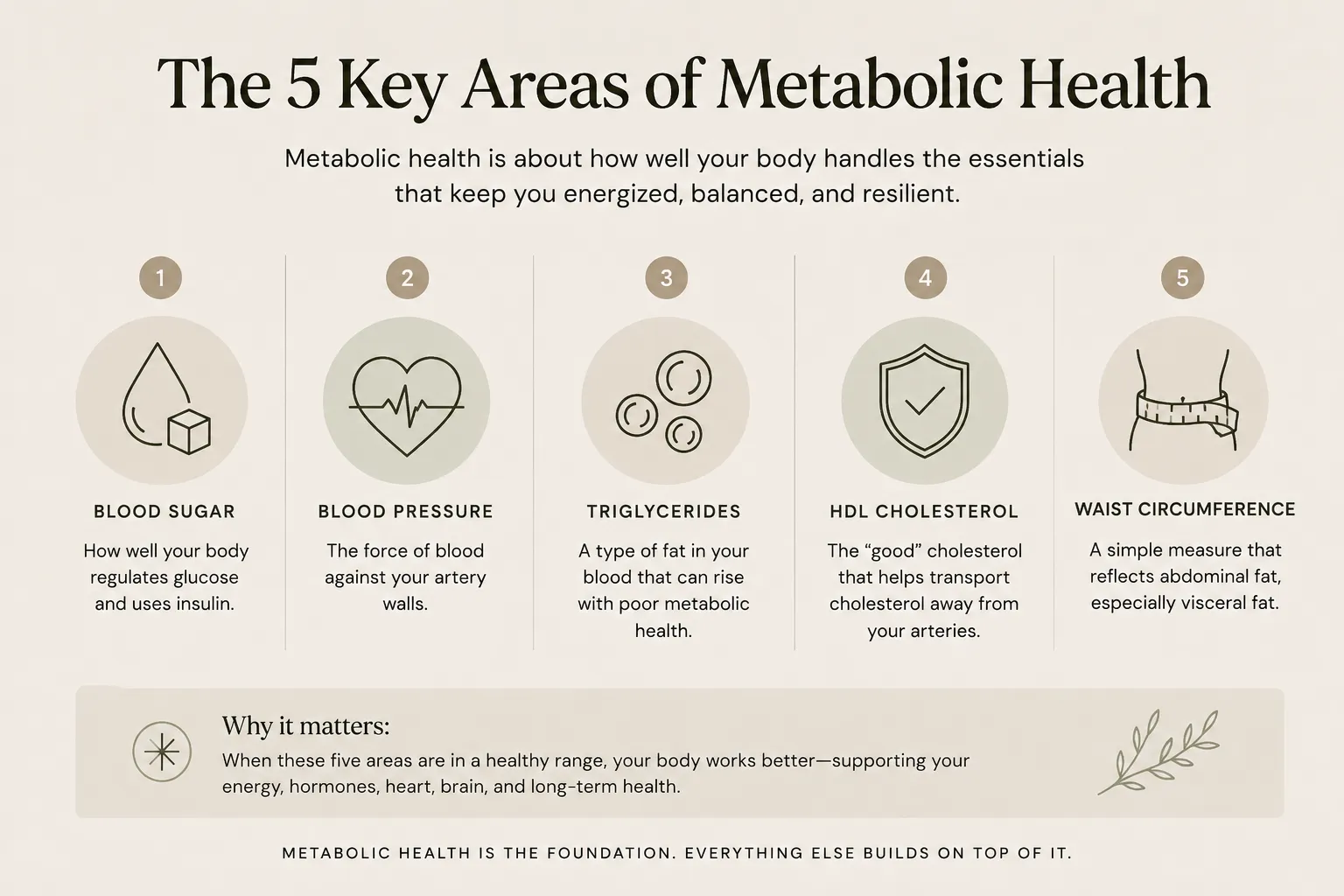
Five of the most commonly discussed are:
Blood sugar — How your body is managing glucose in your bloodstream.
Blood pressure — How much pressure your blood is putting on your arteries.
Triglycerides — A type of fat found in the blood that can rise when metabolic health is impaired.
HDL cholesterol — Often called "good" cholesterol because it helps transport cholesterol away from the arteries.
Waist circumference — A simple measurement that can provide useful information about abdominal fat.
These five are also the familiar risk factors used when talking about metabolic syndrome. Having three or more can indicate metabolic syndrome, which is associated with a higher risk of conditions including heart disease, diabetes and stroke.
But metabolic health doesn't stop at five numbers.
Your sleep, physical activity, nutrition, genetics, stress and overall lifestyle can all influence your metabolic picture too. The American Heart Association's newer cardiovascular-kidney-metabolic framework also emphasizes the connections between these factors rather than treating them as completely separate problems.
Why Your Weight Isn't the Whole Story
Weight matters.
Let's not pretend it doesn't.
Excess body fat can increase metabolic risk, particularly when more fat is stored around the abdomen. But body weight alone doesn't tell us where that fat is stored, how your body is responding to insulin, what your blood pressure looks like or what your triglycerides and HDL are doing.
That's why two people who weigh exactly the same can have very different metabolic profiles.
And it works in the other direction too.
Someone can look relatively lean and still have blood sugar, blood pressure or cholesterol issues.
The research around metabolically healthy obesity has made this distinction particularly interesting. Researchers have identified people with obesity who don't currently show the metabolic abnormalities commonly associated with excess adiposity, as well as people at a normal weight who do have metabolic abnormalities. The definitions aren't standardized, and metabolic health can change over time, but the underlying point is useful: body size and metabolic health aren't interchangeable concepts.
What About Belly Fat?
This is where things get particularly interesting.
Not all belly fat is the same.
Subcutaneous fat sits underneath the skin. It's the fat you can pinch.
Visceral fat sits deeper inside the abdomen, surrounding internal organs.
Visceral fat is particularly relevant to metabolic health because excess abdominal fat is closely associated with insulin resistance and other metabolic risk factors.
This is also why waist circumference can be useful.
You don't need a sophisticated scan to notice that your waist is changing.
Sometimes your body composition is telling you something that the scale isn't.
And this is exactly why body composition is becoming a bigger part of the wellness conversation.
What Are the Signs of Good Metabolic Health?
This is one of the most common questions people ask.
There isn't a single sign that proves you're metabolically healthy.
Instead, you're looking for a pattern.
Healthy blood pressure.
Healthy blood sugar.
Healthy triglyceride and HDL levels.
A waist circumference appropriate for your individual circumstances.
Regular physical activity.
Good quality sleep.
A balanced diet that provides the nutrients your body needs.
And the absence of obvious signs that your metabolism is struggling.
The tricky part?
Many metabolic problems don't produce obvious symptoms at first.
High blood pressure, high triglycerides and low HDL can all exist without making you feel unwell. That's why routine health checks matter.
Feeling fine is wonderful.
But feeling fine isn't the same thing as knowing what's happening inside your body.
What Are the Signs of Poor Metabolic Health?
Again, there isn't one universal symptom.
Some people may notice increased thirst, frequent urination or unusual fatigue when blood sugar is elevated. Others may have high blood pressure, triglycerides or cholesterol without feeling anything unusual at all.
That's why metabolic health is better understood through measurements and trends, not just how you feel on a particular day.
If you've been meaning to get a clearer picture, routine checks of blood pressure, fasting glucose, cholesterol and triglycerides can provide useful information. Waist circumference can add another simple piece of the puzzle.
Is There a Metabolic Health Test?
Not exactly.
There isn't one blood test that can tell you, "Congratulations, your metabolic health is excellent."
Instead, metabolic health is assessed through a combination of measurements.
Depending on your situation, a healthcare professional may look at:
Blood pressure
Fasting blood glucose
HbA1c
Triglycerides
HDL and other cholesterol markers
Waist circumference
Weight and body composition
Medical and family history
Those numbers become much more useful when viewed together.
One slightly elevated result doesn't automatically tell the whole story, just as one good result doesn't guarantee that everything is perfect.
Can You Be Overweight and Metabolically Healthy?
Yes, at least temporarily.
This is one of the reasons metabolic health and weight shouldn't be treated as exactly the same thing.
Some people with obesity don't currently have the blood pressure, blood sugar or lipid abnormalities commonly associated with metabolic dysfunction. Researchers often refer to this as metabolically healthy obesity.
But there's an important catch: the definition isn't standardized, and being metabolically healthy today doesn't necessarily mean the same thing years from now. Some studies suggest that metabolic health can change over time.
So this isn't an argument that weight doesn't matter.
It's an argument for looking at more than weight alone.
Can You Be Thin and Have Poor Metabolic Health?
Also yes.
A smaller body doesn't automatically guarantee healthy blood sugar, blood pressure or cholesterol.
This is sometimes described as metabolically unhealthy normal weight, another reason BMI and scale weight shouldn't be used as the only measure of health.
Your body can carry metabolic risk without making it obvious from the outside.
That's why your lab work and routine health measurements can sometimes tell you more than your reflection does.
How Can You Improve Metabolic Health?
This is where the conversation becomes much more practical.
You don't need to completely reinvent your life tomorrow morning.
Some of the biggest foundations are surprisingly ordinary.
Move regularly.
Walking, resistance training, cardio and simply reducing long periods of inactivity can all contribute to better metabolic health. Regular physical activity is one of the core lifestyle strategies recommended for managing metabolic risk factors.
Build meals around real food.
Think protein, vegetables, fruit, whole grains, legumes and healthy fats rather than relying primarily on highly processed foods.
Prioritize sleep.
Sleep isn't just recovery time. It plays a role in appetite, energy regulation and metabolic function.
Pay attention to your waist, not just your weight.
Your waist circumference can provide useful information about abdominal fat distribution.
Know your numbers.
Blood pressure, blood sugar, cholesterol and triglycerides can tell you things you can't see in the mirror.
And if you're working toward weight loss, remember that losing weight can be one part of improving your metabolic health — not the definition of it.
If you're interested in how modern metabolic therapies fit into this bigger conversation, our Tirzepatide and metabolic health guide explores one of the most discussed pathways in this space.
Why Metabolic Health Matters More Than Your Weight
Weight is easy to obsess over because it's easy to measure.
You can step on the scale every morning.
But metabolic health asks you to look deeper.
How is your blood sugar?
How is your blood pressure?
What are your triglycerides doing?
What's your HDL?
Where is your body storing fat?
How active are you?
How well are you sleeping?
What are you eating most of the time?
Those questions tell you something the scale simply can't.
And that's really the shift we're talking about.
Weight can be a goal. Metabolic health is the bigger picture.
Final Thoughts
You don't need to hate the scale.
You just don't need to let it be the only voice in the room.
Your weight is one piece of information.
Your waist is another.
Your blood pressure is another.
Your blood sugar, cholesterol, triglycerides, sleep, movement and everyday habits all add more pieces to the picture.
And when you put them together, you get a much better idea of what's actually happening inside your body.
That is what makes metabolic health so interesting.
It's not about chasing a perfect number.
It's about building a body that functions well, responds well and is supported well over time.
If you want to understand where you currently stand and what areas of wellness may deserve more attention, you can start with the yrt wellness assessment and use that as a starting point for your own journey.
Frequently Asked Questions
Metabolic health describes how well your body is managing important processes such as blood sugar, blood pressure, blood fats and energy regulation. It is broader than body weight and is best understood by looking at several health markers together.
There isn't one official list of five "signs," but five commonly assessed metabolic factors are blood glucose, blood pressure, triglycerides, HDL cholesterol and waist circumference. These are also the five risk factors commonly used when assessing metabolic syndrome.
There may be no obvious symptoms, particularly in the early stages. High blood pressure, high triglycerides and low HDL cholesterol can exist without noticeable symptoms. Elevated blood sugar can sometimes cause increased thirst, frequent urination, fatigue or weakness.
There isn't one single metabolic health test. A healthcare professional may assess blood pressure, fasting blood glucose, HbA1c, triglycerides, cholesterol, waist circumference, weight and other factors depending on your health history.
Yes. Some people with obesity don't currently have the metabolic abnormalities commonly associated with excess body fat. However, "metabolically healthy obesity" doesn't have one universally accepted definition, and metabolic health can change over time.
Yes. Body size alone doesn't determine metabolic health. Someone with a normal weight can still have elevated blood sugar, blood pressure, triglycerides or other metabolic risk factors.
Start with the fundamentals: regular physical activity, resistance training, a balanced whole-food diet, sufficient sleep, maintaining a healthy waist and weight where appropriate, and keeping track of blood pressure, blood sugar and cholesterol. These foundations are also recommended approaches for reducing metabolic risk.
Metabolic health matters because problems with blood sugar, blood pressure, cholesterol, triglycerides and abdominal fat can increase the risk of conditions such as type 2 diabetes and cardiovascular disease. Looking at these factors together can give you a much clearer picture of health than body weight alone.