GLP-1 vs GLP-1/GIP: Understanding the Difference

Just a few years ago, very few people in the Philippines had heard of GLP-1.
Today, it's a different story.
From doctors' clinics and wellness communities to conversations on social media, more Filipinos are asking questions about GLP-1 medications, dual agonists, and a newer generation of therapies that combine GLP-1 with another hormone called GIP.
It's easy to understand why people feel overwhelmed. The names sound technical, the science moves quickly, and every week seems to bring another headline about metabolic health.
The good news is that the difference between GLP-1 and GLP-1/GIP is easier to understand than most people think.
Both work with hormones your body naturally produces after eating. The difference is that one activates a single pathway, while the other activates two. That small distinction has become one of the biggest developments in modern metabolic medicine.
Understanding GLP-1
GLP-1, short for glucagon like peptide 1, is a hormone your body naturally releases after a meal.
Its role is to help regulate blood sugar while communicating with different organs involved in digestion and appetite. One of its most noticeable effects is helping people feel satisfied after eating. It also slows the rate at which food leaves the stomach and supports the body's natural insulin response.
These effects explain why GLP-1 based medicines have become an important part of treating type 2 diabetes and obesity.
For many people, another noticeable change is something commonly called food noise. Thoughts about food become quieter, making it easier to recognise the difference between physical hunger and habitual eating. While every person's experience is different, this has become one of the most discussed effects of GLP-1 therapy.
Where Does GIP Fit In?
GIP, or glucose dependent insulinotropic polypeptide, is another hormone your body releases after eating.
Like GLP-1, it helps regulate blood sugar by supporting insulin secretion. Researchers have also been studying its role in energy balance, fat metabolism, and how the body responds to nutrients.
For years, GIP received far less attention than GLP-1. That changed when scientists began exploring what might happen if both hormones were activated together instead of separately.
The result was a new class of therapies known as GLP-1/GIP dual agonists.
What Does GLP-1/GIP Mean?
A GLP-1/GIP therapy activates both hormone pathways at the same time.
Instead of working through GLP-1 alone, these medicines also activate GIP receptors, allowing researchers to target multiple biological systems involved in metabolism.
That doesn't automatically make them "better."
It simply means they're designed differently.
Modern metabolic medicine is moving away from the idea that body weight is controlled by a single hormone or a single habit. Instead, scientists now recognise that appetite, energy use, insulin sensitivity, and metabolism all work together.
GLP-1/GIP therapies were developed with that understanding in mind.
GLP-1 vs GLP-1/GIP at a Glance
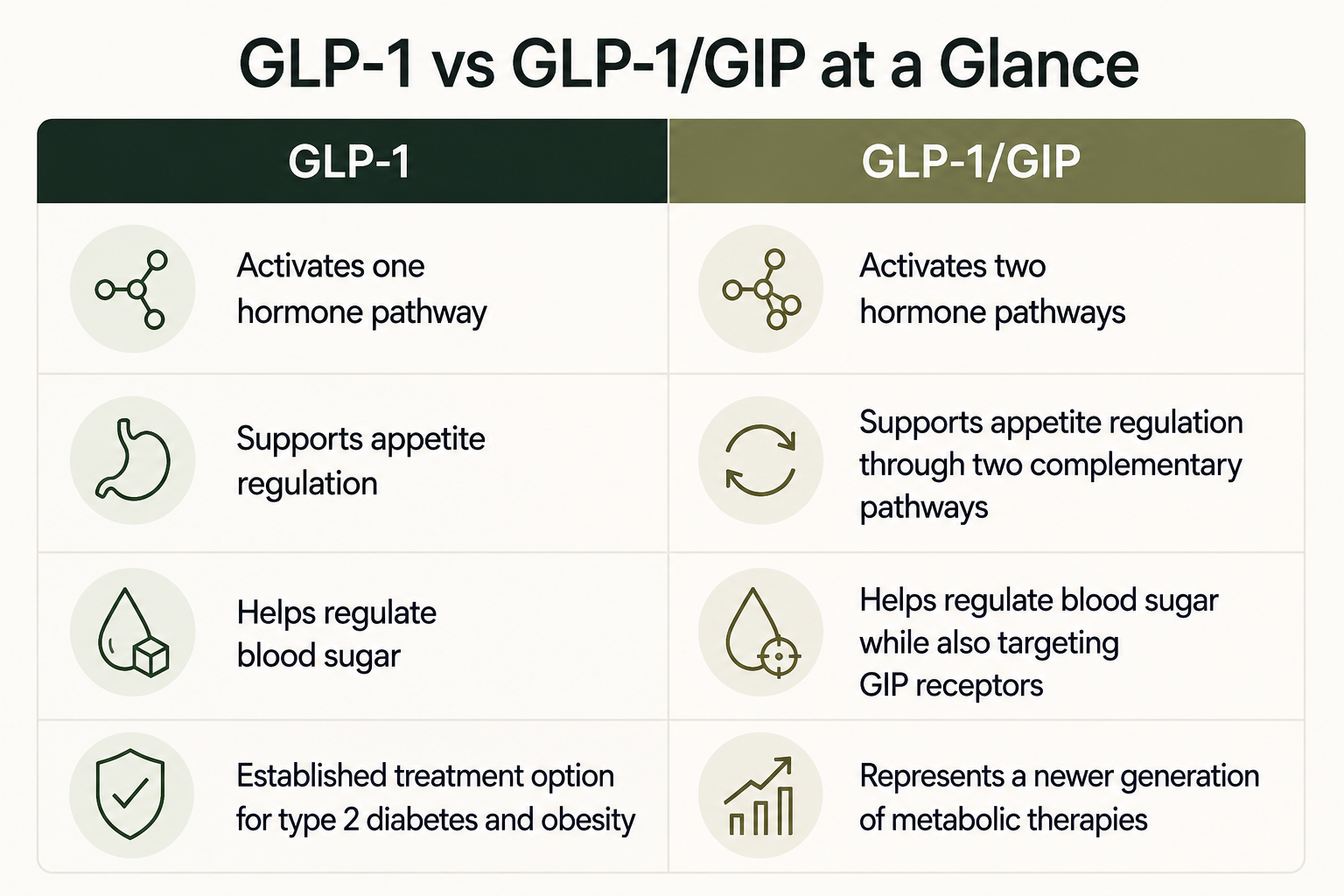
Neither approach is universally better than the other. The most appropriate option depends on an individual's medical history, health goals, and guidance from a qualified healthcare professional.
Why This Matters
Here in the Philippines, obesity, type 2 diabetes, and metabolic syndrome continue to affect millions of adults. At the same time, more people are looking beyond crash diets and quick fixes in search of approaches supported by science.
That's one reason conversations around GLP-1 and GLP-1/GIP have grown so quickly.
These therapies aren't designed to replace healthy eating, regular movement, or good sleep. They're designed to work alongside those habits by supporting the biological systems that influence appetite and metabolism.
Understanding how they work helps people ask better questions, have more informed conversations with healthcare professionals, and make decisions based on evidence rather than social media trends.
Looking Ahead
The science behind metabolic health continues to evolve.
Researchers are now studying therapies that target multiple hormone pathways, investigate mitochondrial health, and explore how the body regulates energy at a cellular level. Each new discovery helps us better understand why weight management is far more complex than simply eating less and moving more.
For people in the Philippines, that's encouraging. It reflects a growing shift toward treating obesity and metabolic disease as complex medical conditions rather than personal failures.
Final Thoughts
The difference between GLP-1 and GLP-1/GIP isn't really about choosing one over the other.
It's about understanding how modern medicine continues to uncover the biology behind hunger, fullness, blood sugar, and metabolism.
The more we learn, the more we realise that lasting health is rarely built around a single solution. It's the result of better information, better habits, and evidence based care working together.
At yrt, that's exactly what we hope to provide. Clear, balanced education that helps people in the Philippines better understand modern wellness before deciding which path is right for them.
Frequently Asked Questions
What is the difference between GLP-1 and GLP-1/GIP?
GLP-1 therapies activate one hormone pathway, while GLP-1/GIP therapies activate two hormone pathways involved in appetite regulation, blood sugar control, and metabolism.
Is GLP-1/GIP better than GLP-1?
Not necessarily. Both have important roles in metabolic medicine. The most appropriate option depends on a person's health profile, treatment goals, and advice from a qualified healthcare professional.
Why was GIP added to newer therapies?
Researchers wanted to explore whether activating both GLP-1 and GIP pathways could provide additional metabolic benefits compared with targeting GLP-1 alone.
Does GLP-1/GIP reduce appetite?
Yes. Appetite regulation is one of the biological pathways influenced by GLP-1/GIP therapies, alongside blood sugar regulation and metabolic function.
Why are more people in the Philippines talking about GLP-1?
Growing awareness of obesity, type 2 diabetes, and metabolic health has led to increased interest in therapies that work with the body's natural hormone systems. As more research becomes available, conversations around GLP-1 and GLP-1/GIP continue to grow.